
Blue Tansy vs German Chamomile: Why They're Blue and How They Differ
Both oils turn a deep blue thanks to chamazulene, a molecule that only forms during distillation. How the two compare in scent, chemistry, supply and use, and why blue tansy is not common tansy.
Few things in skincare are as striking as a deep blue face oil. That colour almost always comes from one of two essential oils: blue tansy or German chamomile. They share the compound that makes them blue, and both are linked with calming skin, but they are different plants with different scents and chemistry. Here is how they compare.
Why they are blue
The colour comes from chamazulene, a deep blue molecule. Remarkably, chamazulene is not present in either living plant. It forms during steam distillation, when heat transforms a colourless precursor compound (matricin in German chamomile) into chamazulene. That is why a blue essential oil comes from a plant with green leaves and yellow-and-white flowers.
Chamazulene is also why blue oils are linked with soothing skin: laboratory studies have found it has anti-inflammatory and antioxidant activity. Over time, and with exposure to light and air, chamazulene breaks down and the oil turns green, then brownish. A green blue tansy is usually an old one.
Side by side
| Blue tansy | German chamomile | |
| Botanical name | Tanacetum annuum | Matricaria chamomilla (also M. recutita) |
| Also called | Moroccan blue chamomile | Blue chamomile |
| Where it grows | Mainly Morocco | Widely cultivated in Europe, Egypt and elsewhere |
| Colour | Deep indigo | Deep inky blue |
| Scent | Sweet, fruity-herbaceous, slightly camphor-like | Heavy, herbaceous, hay-like, slightly bitter |
| Key compounds | Chamazulene, sabinene, camphor, myrcene | Chamazulene, alpha-bisabolol and bisabolol oxides |
| Supply | Limited; often adulterated | More established and consistent |
German chamomile: the better studied of the two
German chamomile is one of the most researched medicinal plants in Europe, though most of that work involves chamomile extracts and teas rather than the essential oil. Its oil contains alpha-bisabolol, a compound widely used in cosmetics for its skin-soothing properties. It is the more established choice for skin that feels sensitive or reactive.
Do not confuse it with Roman chamomile (Chamaemelum nobile), which produces a pale oil with a sweet, apple-like scent and a different chemistry. Roman chamomile is more often used in evening and calming blends, such as our Sacred Rest Oil.
Blue tansy: the fashionable one
Blue tansy became a skincare favourite in the 2010s, largely for its colour and sweet scent. Its research base is small, and supply is limited because it grows mainly in one region. Note that blue tansy is not the same as common tansy (Tanacetum vulgare), whose oil is high in thujone and is not used in skincare.
How to use blue oils
- Low dilution: both are potent in colour and scent. 0.5 to 1 per cent in a face oil is plenty; see our dilution chart.
- Expect a blue tint: at higher levels they can tint skin, towels and pillowcases temporarily.
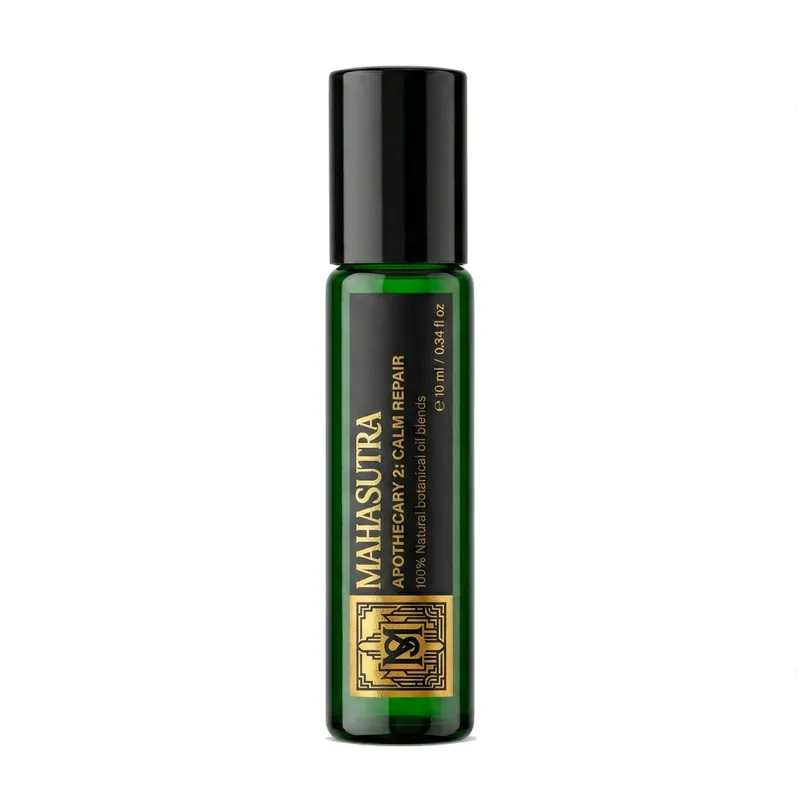
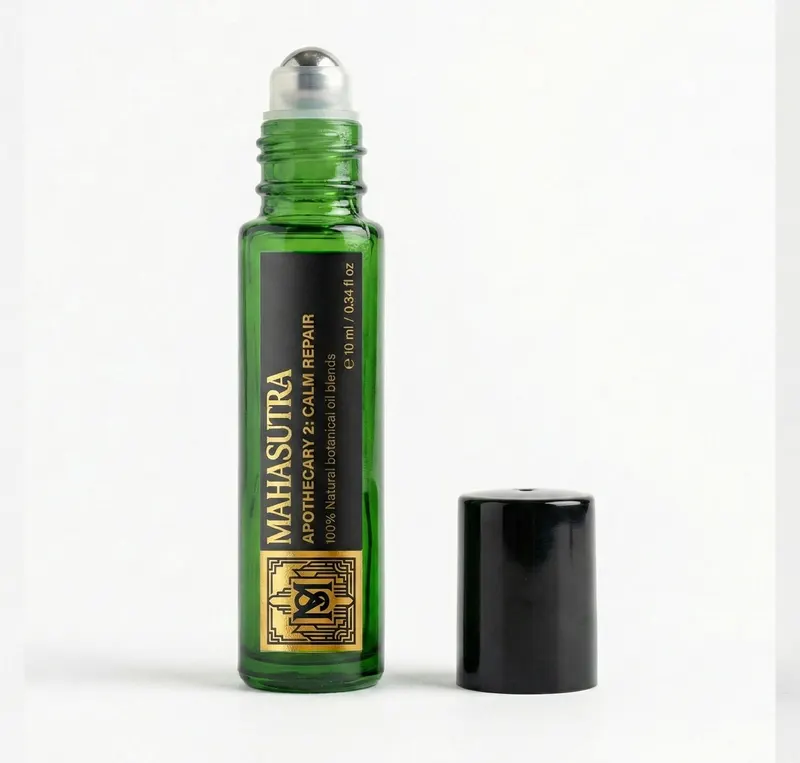
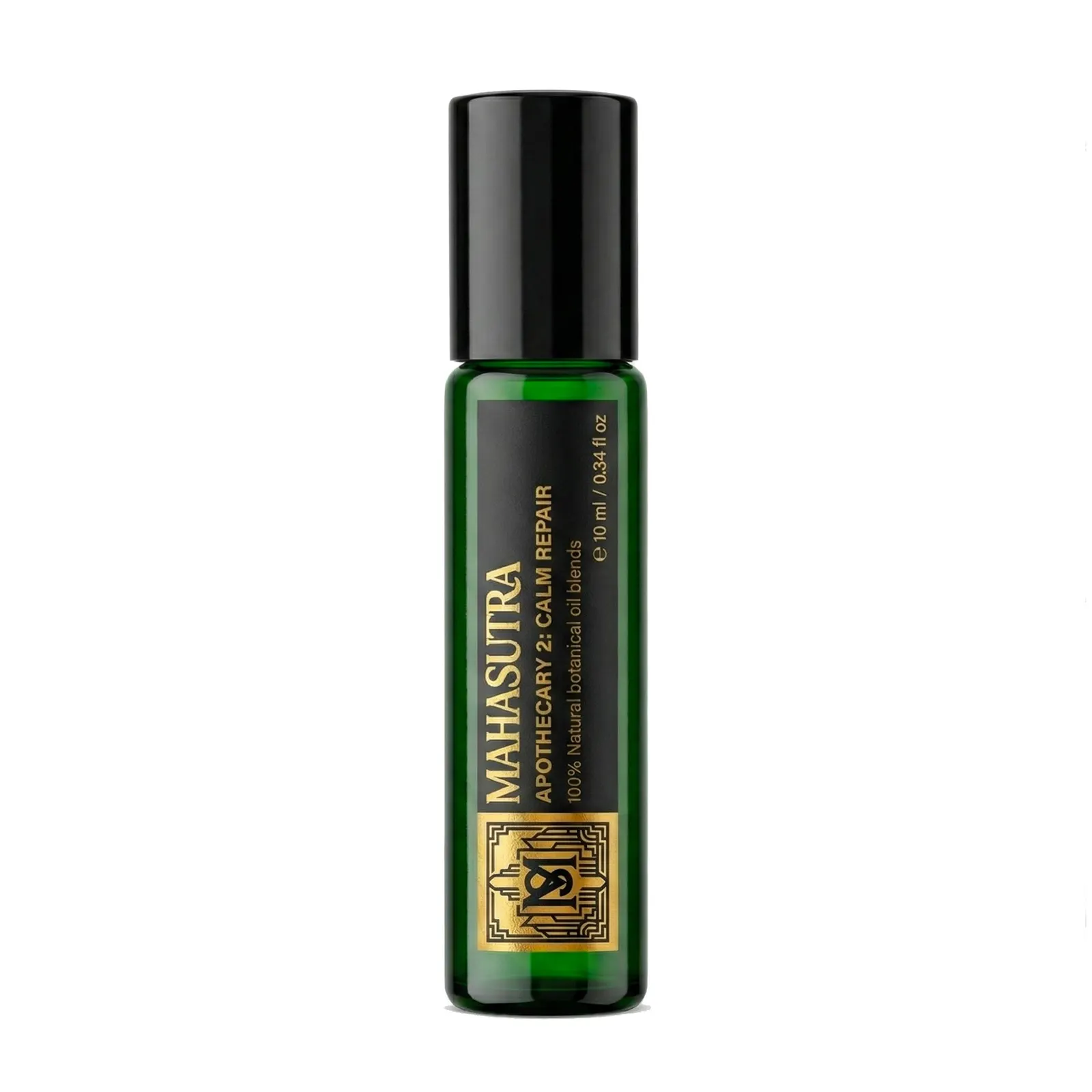
- Pair them: they blend well with lavender, helichrysum and copaiba. Our Calm Repair Oil uses both blue tansy and German chamomile alongside helichrysum and lavender in a cooling roll-on.
- Store well: keep tightly closed, cool and dark to protect the chamazulene.
Safety
Both oils are generally well tolerated. Both come from the daisy family (Asteraceae), so people allergic to ragweed, daisies, chrysanthemums or chamomile tea should patch-test carefully or avoid them. Blue tansy contains some camphor, so avoid it during pregnancy and for people with epilepsy unless advised otherwise. Do not apply to broken skin, and stop if irritation develops.
For another oil often used in calming skin blends, read our guide to helichrysum.
Common questions
Why is blue tansy oil blue?
Its colour comes from chamazulene, which forms from a colourless precursor during steam distillation.
Which is better for skin, blue tansy or German chamomile?
German chamomile is better studied and contains alpha-bisabolol. Blue tansy is popular for its colour and scent but has less research.
Why did my blue tansy turn green?
Chamazulene breaks down with age, light and air. Store blue oils tightly closed, cool and dark.
Are blue tansy and tansy the same?
No. Blue tansy is Tanacetum annuum; common tansy, Tanacetum vulgare, is high in thujone and not used in skincare.
This guide is for general information and is not medical advice. Speak to a doctor or pharmacist before using essential oils if you are pregnant, breastfeeding, take regular medication, have epilepsy, asthma or a skin condition, or are using them on a child.
Sources
- Tisserand R, Young R. Essential Oil Safety, 2nd ed. 2014
- European Medicines Agency: Community herbal monograph on Matricaria recutita L., flos