
Essential Oil Dilution Chart: How Many Drops per 10 ml and 30 ml
Diluting is the single most important essential oil safety habit. A simple drops-per-millilitre chart, which strength to use for face, body and massage, the oils that need lower limits, and how to patch-test.
Diluting essential oils is the single most important safety habit, and the one most often skipped. Undiluted oils are the leading cause of essential oil skin reactions, and once someone becomes sensitised to an oil, the allergy usually lasts for life. This guide gives you a simple dilution chart, explains which strength to use when, and covers the oils that need extra care.
Why dilute at all?
Essential oils are highly concentrated. One drop of rose oil represents dozens of flowers; one drop of peppermint oil carries far more menthol than a handful of leaves. On skin, that concentration can cause irritation (redness, burning, rash at the spot) or, more seriously, sensitisation, an allergic response that builds up over repeated exposure and can then flare at even tiny amounts. Diluting in a carrier oil, lotion or gel dramatically lowers both risks and also helps the oil spread evenly over a larger area.
The dilution chart
These figures assume about 20 drops per millilitre, a common rule of thumb. Drop size varies between bottles and oils, so treat them as approximate.
| Dilution | In 10 ml carrier | In 30 ml carrier | In 50 ml carrier |
| 0.5% | 1 drop | 3 drops | 5 drops |
| 1% | 2 drops | 6 drops | 10 drops |
| 2% | 4 drops | 12 drops | 20 drops |
| 3% | 6 drops | 18 drops | 30 drops |
| 5% | 10 drops | 30 drops | 50 drops |
The figure is the total of all essential oils in the blend. If you use three oils in a 2 per cent blend in 30 ml, that is 12 drops in total, not 12 of each.
Which strength to use
| Use | Typical dilution |
| Face, daily use | 0.5–1% |
| Body oils and lotions for daily use | 1–2% |
| Massage, short-term use on a larger area | 2–3% |
| Small area for a specific short-term purpose, such as a sore muscle | 3–5% |
| Sensitive skin, older adults, during illness | 0.5–1% |
| Children over 2 (with oils that are suitable) | 0.5–1% |
Lower is usually better for anything you will use every day. More oil does not mean more benefit; it mainly means more risk.
Oils that need lower limits
Some oils have specific maximum levels because of particular compounds. A few common examples, based on Tisserand and Young's Essential Oil Safety:
- Clove, cinnamon leaf and holy basil: rich in eugenol, which can irritate and sensitise. Keep to about 0.5 to 1 per cent. See our holy basil guide.
- Cinnamon bark and cassia: cinnamaldehyde is a strong sensitiser; very low limits, generally best avoided on skin.
- Lemongrass, may chang and melissa: citral can sensitise; keep below 1 per cent (around 0.7 per cent for lemongrass).
- Cold-pressed bergamot, lime, lemon, bitter orange and grapefruit: phototoxic. On skin that will see sunlight within 12 hours, keep below the published limits or choose furanocoumarin-free (FCF) or steam-distilled versions.
- Peppermint, eucalyptus, rosemary and other menthol or cineole oils: not on or near the face of babies and young children.
Choosing a carrier
- Jojoba: technically a liquid wax; stable and long-lasting, close to skin's own sebum.
- Fractionated coconut or MCT oil: light, odourless and non-greasy; ideal for roll-ons.
- Squalane: silky, fast-absorbing and very stable.
- Sweet almond, apricot kernel, grapeseed: good massage oils; avoid nut oils if you have nut allergies.
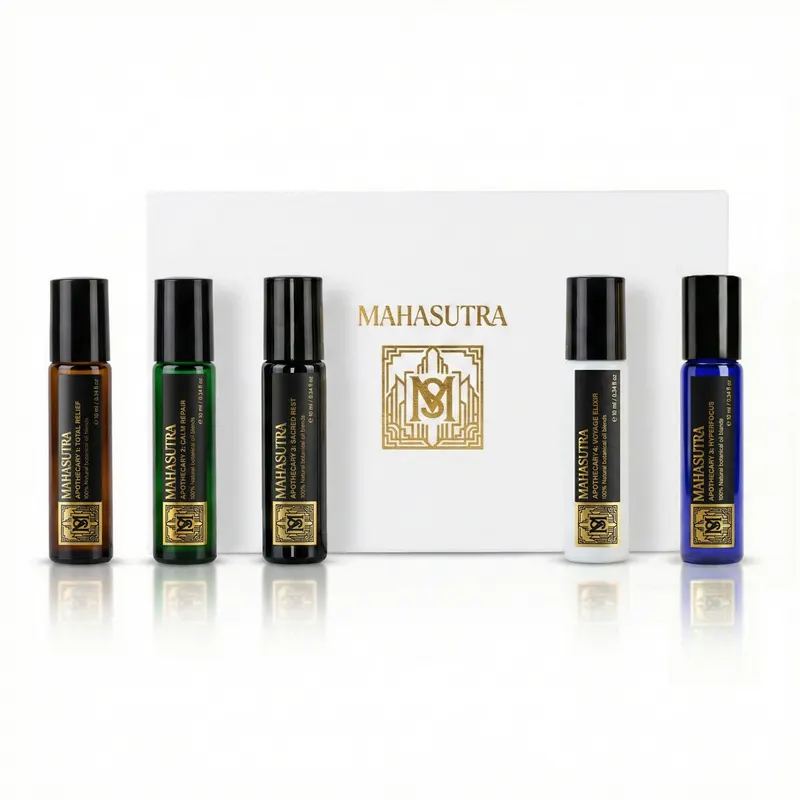
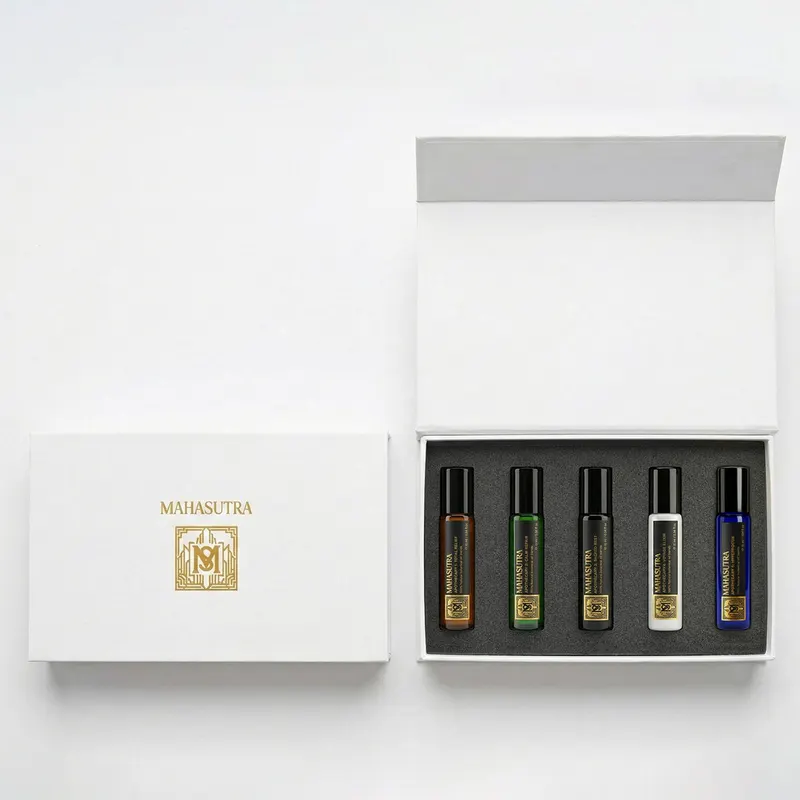
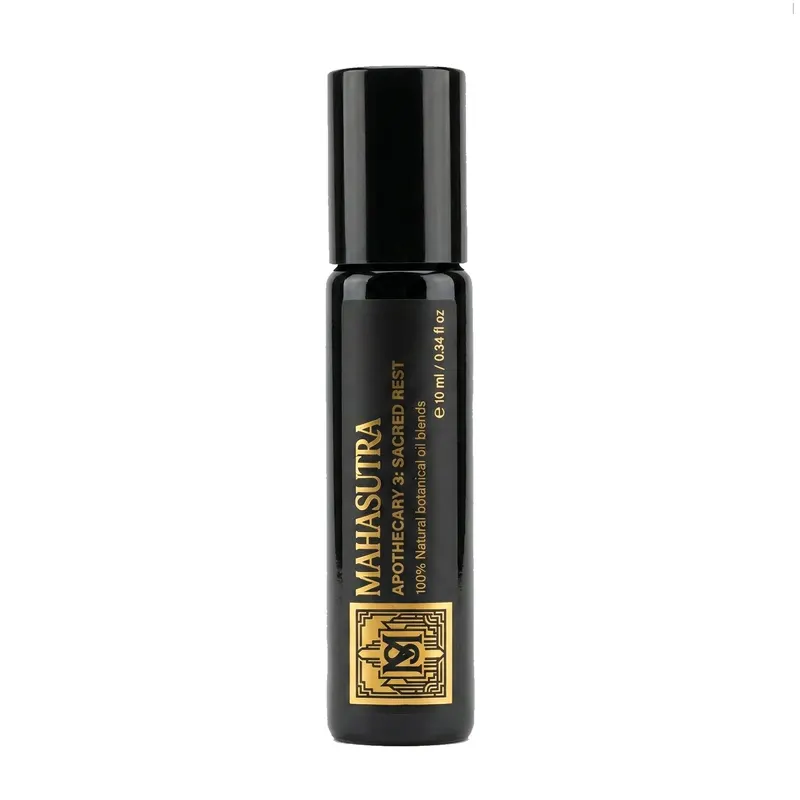
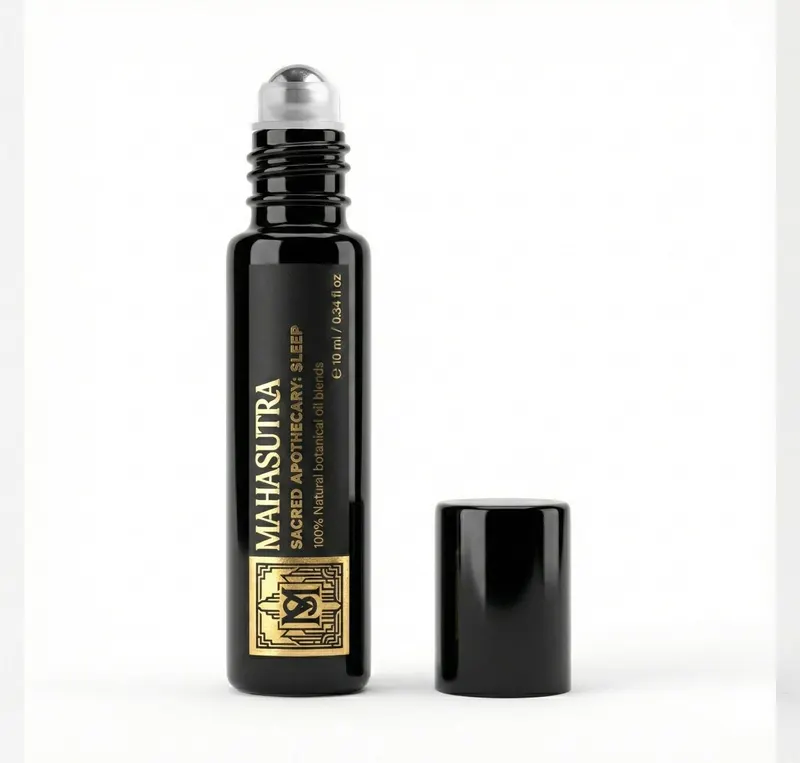
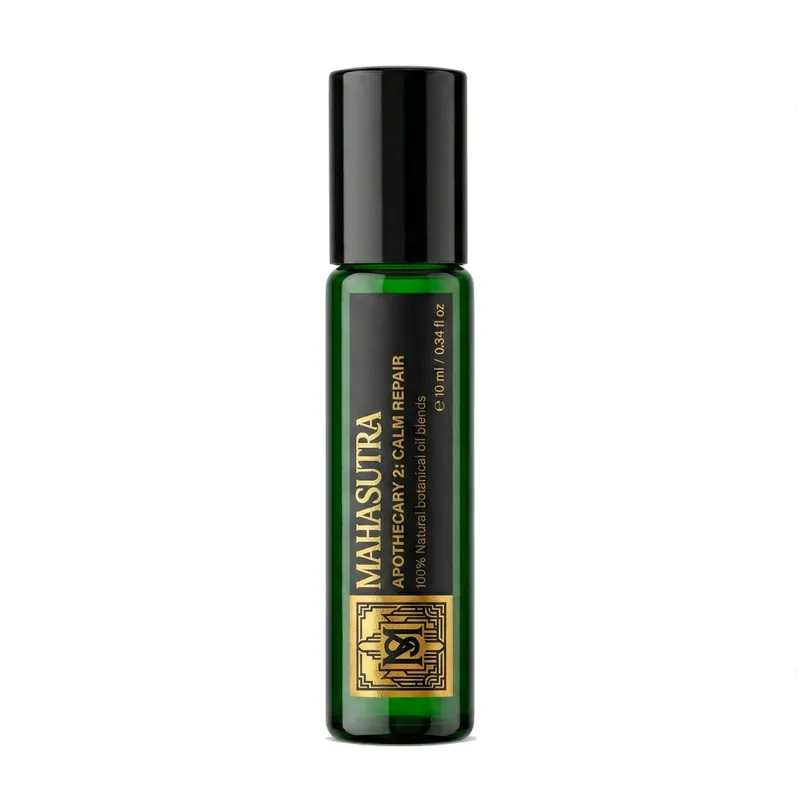
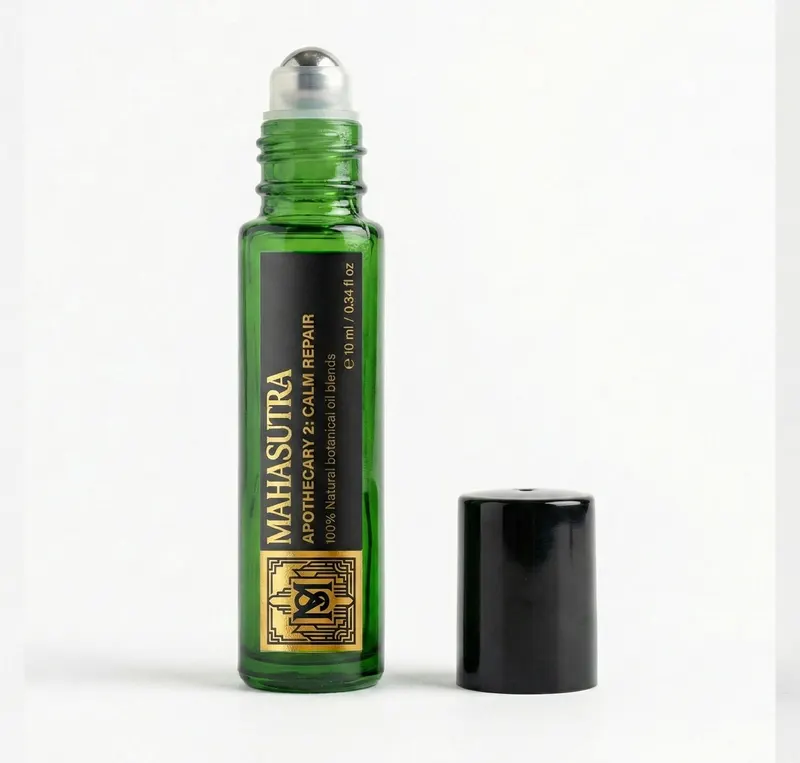
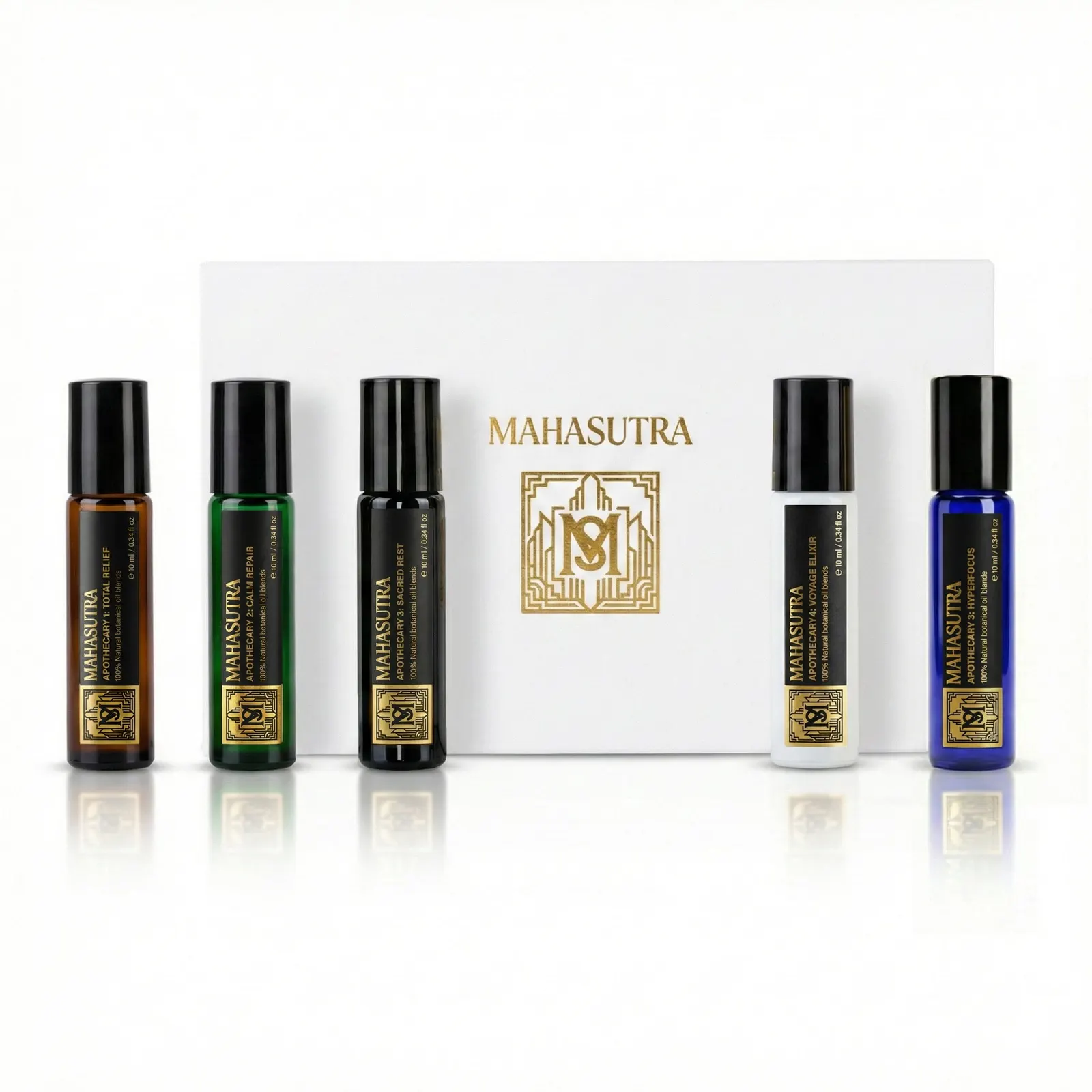
Our therapeutic roll-ons are made this way: our Sacred Rest Oil, for example, is pre-diluted in MCT oil, jojoba and squalane, so it is ready to apply. The Therapeutic Oil Discovery Set is a simple way to try several blends at skin-ready strength.
How to patch-test
- Dilute the oil at the strength you plan to use.
- Apply a small amount to the inside of your forearm and cover with a plaster.
- Leave for 24 to 48 hours, keeping it dry.
- If you see redness, itching, swelling or blistering, wash with soap and water and do not use the oil.
Never use undiluted essential oils on skin as a routine habit, put essential oils in your eyes, ears or nose, or swallow them. If an oil gets in your eye, rinse with plenty of clean, lukewarm water for at least 15 minutes and get medical advice if pain or blurred vision continues. For the most common mistakes and the harm they cause, read 10 things you should never do with essential oils.
Common questions
How many drops of essential oil per 10 ml?
About 2 drops for 1%, 4 drops for 2% and 6 drops for 3%, assuming about 20 drops per millilitre.
What dilution should I use on my face?
0.5 to 1% for daily use, which is 1 to 2 drops in 10 ml of carrier oil.
Can I put essential oils directly on skin?
As a routine habit, no. Undiluted oils are the main cause of irritation and sensitisation, which can become a lifelong allergy.
What is the best carrier oil?
Jojoba, fractionated coconut (MCT) oil and squalane are stable and light; sweet almond and apricot kernel are good for massage.
This guide is for general information and is not medical advice. Speak to a doctor or pharmacist before using essential oils if you are pregnant, breastfeeding, take regular medication, have epilepsy, asthma or a skin condition, or are using them on a child.
Sources
- Tisserand R, Young R. Essential Oil Safety, 2nd ed. 2014
- Tisserand Institute: Dilution guidelines