
Holy Basil (Tulsi) Essential Oil: Uses, Safety and How It Differs From Basil
Tulsi is sacred in India and widely drunk as tea, but its essential oil is a very different thing: spicy, clove-like and rich in eugenol. How to use it safely and how it compares with sweet basil.
In India, holy basil, or tulsi, is more than a herb. It is grown in courtyards and temple gardens, offered in daily worship, and drunk as tea for its reputation as a calming, restorative plant. Its essential oil is now widely sold, but it behaves very differently from the tea. Here is what holy basil essential oil is, how it differs from sweet basil, and how to use it safely.
What holy basil is
Holy basil is Ocimum tenuiflorum (also listed as Ocimum sanctum), a close relative of the sweet basil used in cooking. There are several traditional varieties, including Rama tulsi with green leaves, Krishna tulsi with purple leaves, and Vana tulsi, a wild form. The essential oil is steam-distilled from the leaves and flowering tops.
What it smells like
Holy basil oil is warm, spicy and clove-like, with a green, peppery, slightly minty edge. It is noticeably spicier than sweet basil, because of its high eugenol content, the same compound that makes clove smell like clove.
Holy basil versus sweet basil
| Holy basil (tulsi) | Sweet basil | |
| Botanical name | Ocimum tenuiflorum | Ocimum basilicum |
| Typical main compound | Eugenol (varies by type) | Linalool or methyl chavicol, depending on chemotype |
| Scent | Clove-like, spicy, peppery | Sweet, green, anise-like or floral |
| Main safety point | Skin sensitisation from eugenol; keep dilution low | Methyl chavicol types are best avoided on skin |
Tea and supplements are not the oil
Most of the research on holy basil, including studies on stress, involves leaf extracts or teas taken by mouth over weeks. These contain water-soluble and heavier compounds that are absent from the essential oil, while the oil concentrates the volatile compounds such as eugenol far beyond what tea contains. Findings about tulsi tea or capsules cannot be applied to the essential oil.
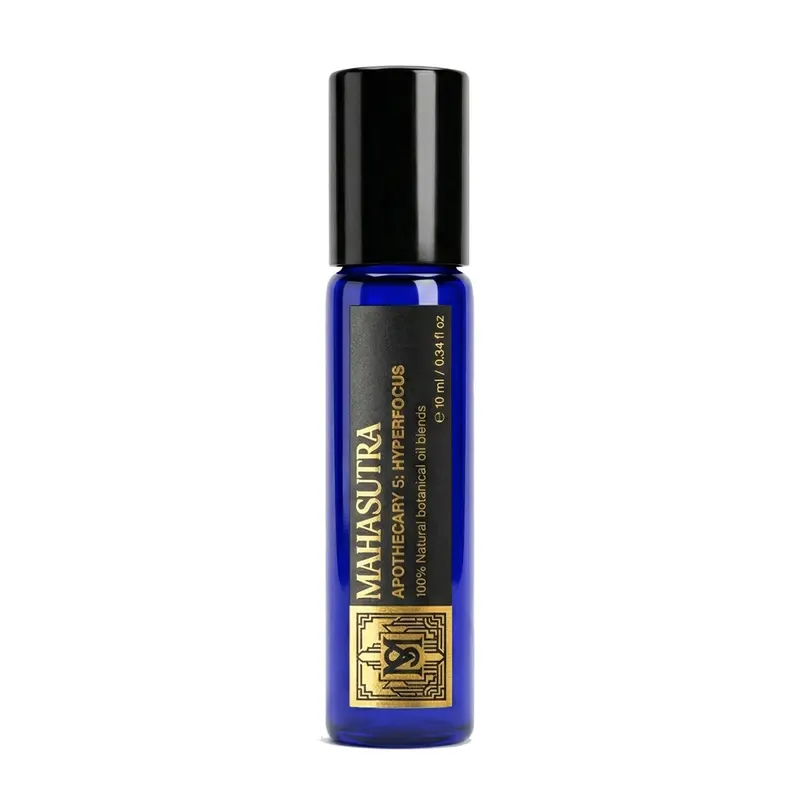
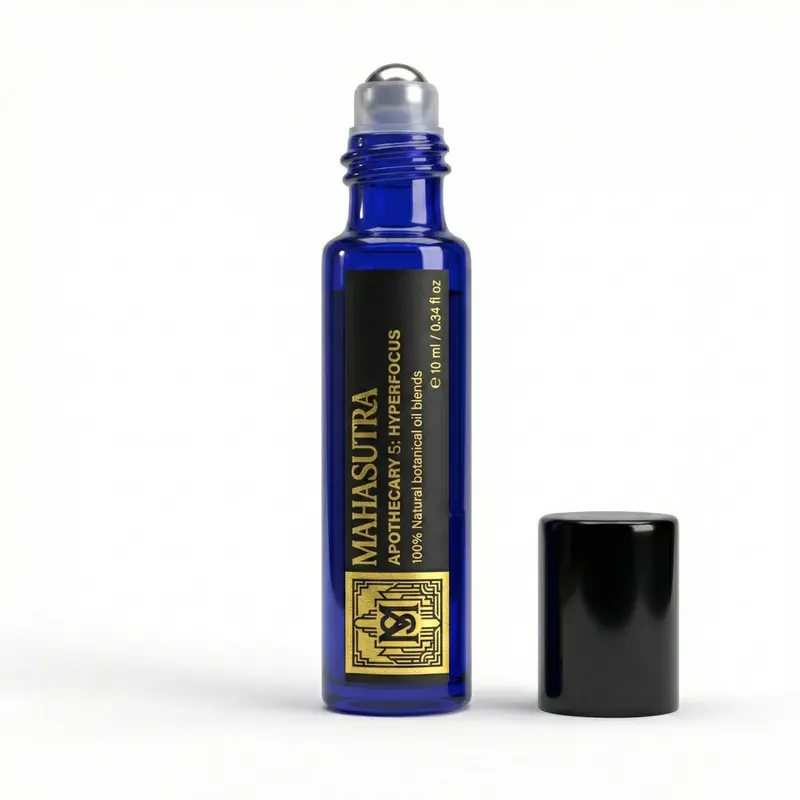
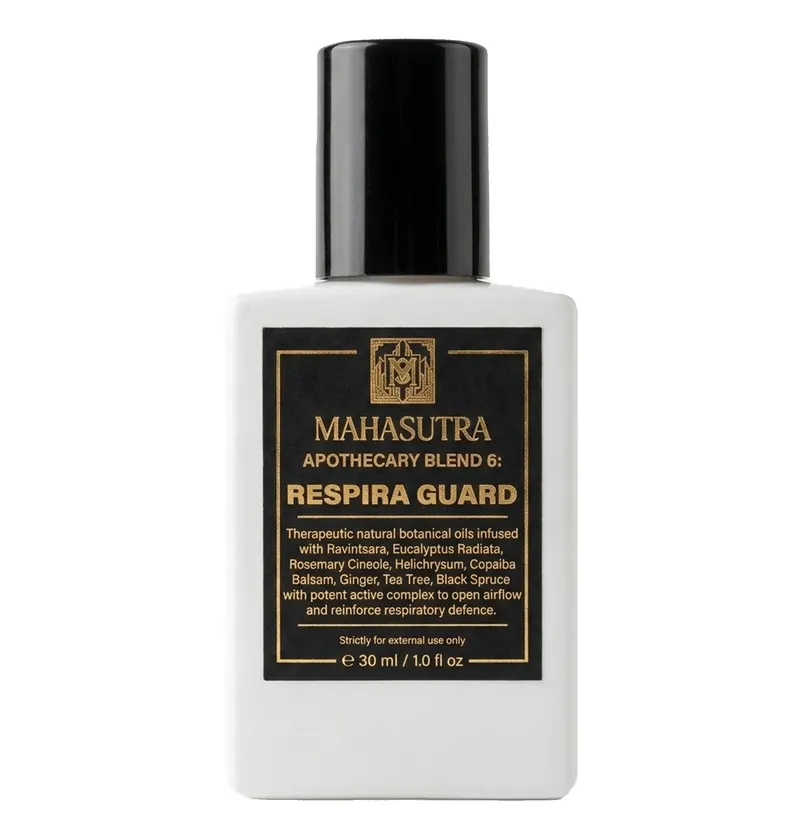
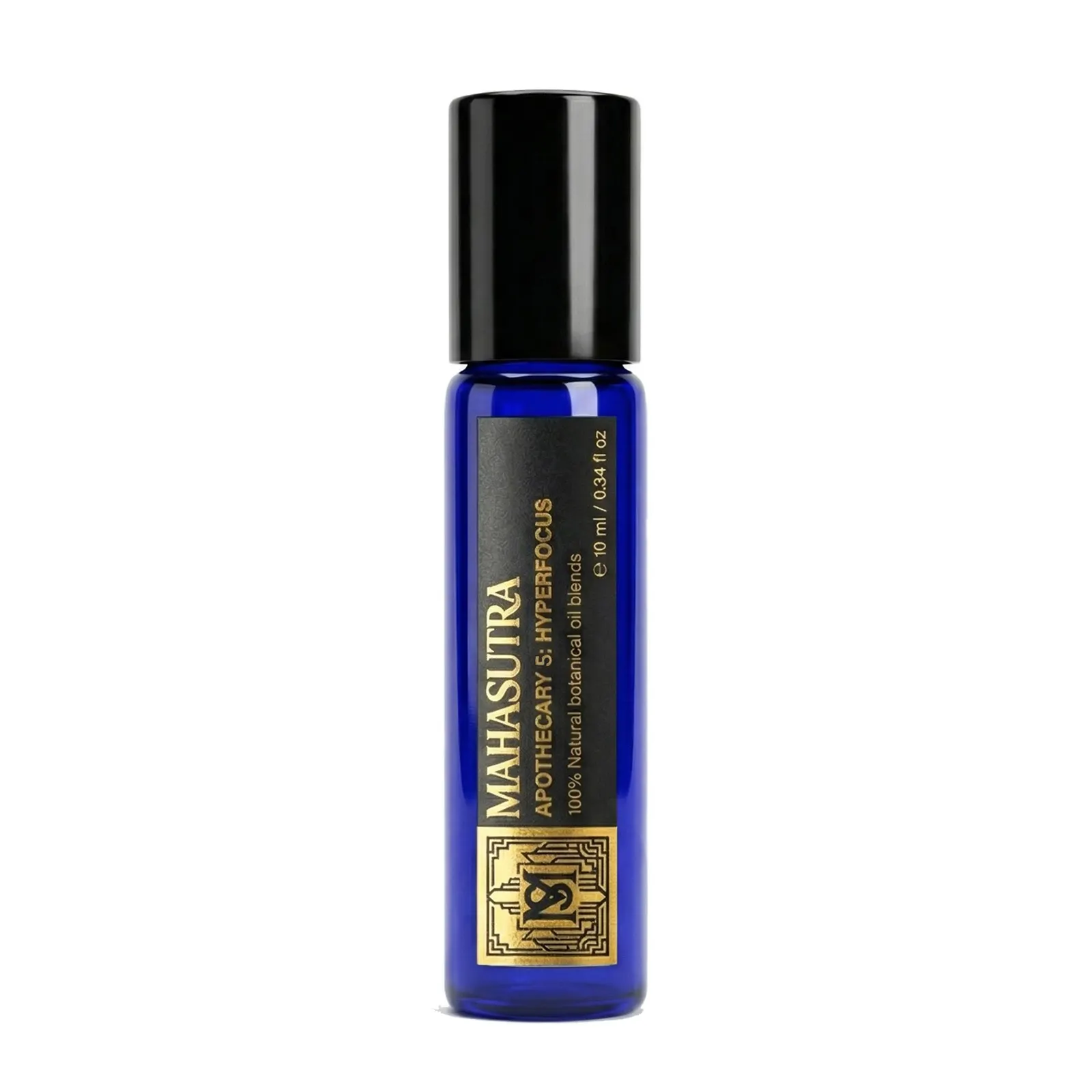
The oil is used in aromatherapy for its warm, uplifting scent, often in blends for focus and for clearing the head. It appears in our Hyperfocus Oil and Respira Guard Oil as a small accent alongside rosemary, peppermint and frankincense.
How to use holy basil oil safely
Keep skin dilutions to 1 per cent or less. The standard safety reference, Tisserand and Young's Essential Oil Safety, recommends a maximum of 1 per cent for holy basil on skin because its eugenol content can irritate and sensitise. That is about 2 drops in 10 ml of carrier oil.
- Do not use it undiluted, and do not use it on broken or very sensitive skin.
- In a diffuser, one or two drops with citrus or rosemary is enough; it is strong.
- Eugenol-rich oils can slow blood clotting when taken internally. Do not swallow essential oils, and if you take blood-thinning medication or are due to have surgery, ask a pharmacist before using eugenol-rich oils regularly.
- Avoid during pregnancy and breastfeeding unless advised otherwise, and do not use on young children.
- Store tightly closed: oxidised oils are more likely to irritate skin.
Blending ideas
Holy basil pairs well with bergamot (furanocoumarin-free), grapefruit, rosemary, peppermint, frankincense and cardamom. In perfumery it adds a spicy-green twist to citrus colognes and incense accords. Use it as an accent rather than a main note.
For a deeper look at another sacred resin used in the same blends, read our guide to frankincense.
Common questions
Is tulsi oil the same as tulsi tea?
No. Tea and supplements contain compounds absent from the oil, while the oil concentrates volatile compounds such as eugenol. Research on tea doesn't apply to the oil.
How much holy basil oil can I use on skin?
Keep it to 1% or less (about 2 drops in 10 ml), the maximum recommended in Essential Oil Safety, because eugenol can irritate and sensitise.
Can I use holy basil oil if I take blood thinners?
Ask a pharmacist first; eugenol-rich oils can affect blood clotting if taken internally. Never swallow essential oils.
This guide is for general information and is not medical advice. Speak to a doctor or pharmacist before using essential oils if you are pregnant, breastfeeding, take regular medication, have epilepsy, asthma or a skin condition, or are using them on a child.
Sources
- Tisserand Institute: Eugenol
- Tisserand R, Young R. Essential Oil Safety, 2nd ed. 2014