
Spikenard Essential Oil: Smell, Uses, Safety and Sustainability
Spikenard has been traded from the Himalaya for three thousand years and named in the Gospels. Here is what it smells like, what the evidence does and doesn't show, how to use it, and why it is now critically endangered.
Few aromatic materials carry as much history as spikenard. It was traded from the Himalaya to Rome, listed in Ayurvedic texts, and named in both the Song of Songs and the Gospels, where a jar of it is broken open and "the house was filled with the fragrance". Today it is one of the most requested oils for evening routines, and one of the most misunderstood. This guide covers what spikenard is, what it smells like, what is and isn't known about its effects, and the conservation problem every buyer should know about.
What spikenard is
Spikenard essential oil is steam-distilled from the roots and rhizomes of Nardostachys jatamansi, a small flowering plant of the valerian family. It grows wild at roughly 3,000 to 4,500 metres in the Himalaya, mostly in Nepal, with smaller populations in Bhutan and Sikkim. In Hindi and Sanskrit it is called jatamansi; in older European texts, nard.
It is the only species in its genus, and it is often confused with valerian, which is a relative. The two share an earthy, rooty character, but they are different plants and different oils. If you are comparing the two, our guide to valerian root oil covers the other side.
What does spikenard smell like?
Spikenard is not a pretty smell on first meeting. Expect damp earth, moss, warm wood and a musky, slightly animalic depth, closer to vetiver or patchouli than to anything floral. Some people find it musty at full strength. Diluted and blended, it becomes soft, warm and grounding, and it lasts for hours on skin and fabric.
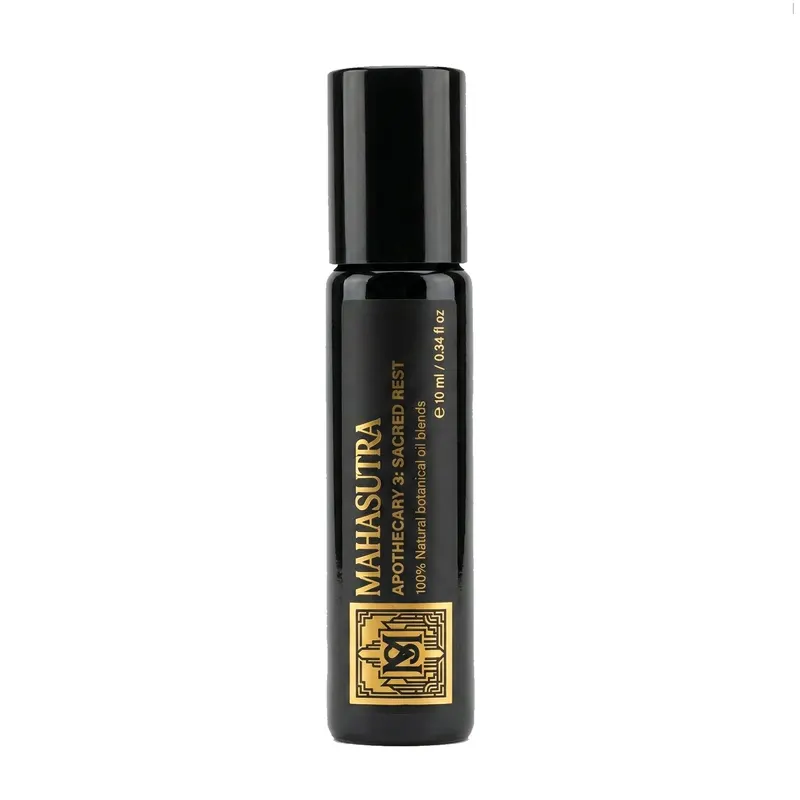
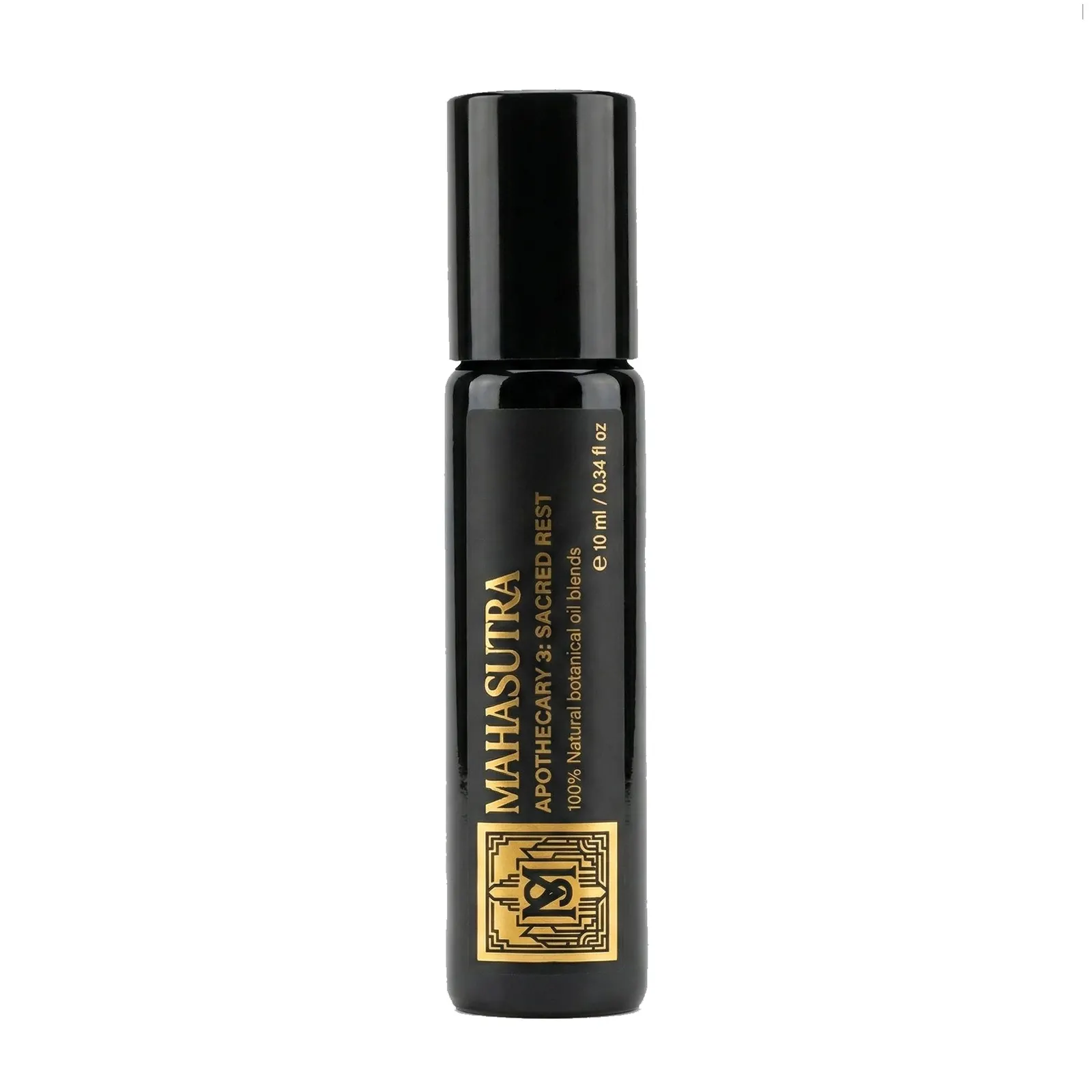
It pairs naturally with lavender, which lifts it; with sandalwood and cedarwood, which round it out; and with frankincense and benzoin, which add warmth. That is why it sits in so many evening blends, including our Sacred Rest Oil, where it works alongside lavender, valerian root, vetiver, Roman chamomile and sandalwood.
What the evidence does and doesn't show
Spikenard's reputation for calm comes mainly from tradition. In Ayurveda, jatamansi root has long been used for restlessness and poor sleep. Laboratory and animal studies on jatamansi root extracts have explored sedative and anti-anxiety activity, which is why the plant keeps attracting research interest.
There are, however, no good-quality human trials of spikenard essential oil for sleep or anxiety. Root extracts taken by mouth are not the same thing as a distilled oil smelled or applied to skin, and results from rodents do not transfer neatly to people. Anyone telling you spikenard is "proven" to treat insomnia is overstating the case.
What is reasonably well supported is the broader principle: a consistent, pleasant scent used as part of an evening routine helps the routine itself. Trials on lavender inhalation, the best-studied aromatic for sleep, show that scent works best as an amplifier of good sleep habits rather than a replacement for them. Our guide to essential oils for sleep goes through that research in detail.
How to use spikenard
- In a blend on skin: spikenard is usually used at low levels because it is powerful. In a body oil, 1 to 2 per cent total essential oil is plenty; see our dilution chart for drop counts.
- On pulse points before bed: a pre-diluted roll-on is the simplest way to make it part of a routine. Apply, then take a few slow breaths.
- In a diffuser or on lava stones: one or two drops alongside lavender or cedarwood is enough. On its own it can feel heavy in a small room.
- In meditation or yoga practice: its slow, earthy character is traditionally associated with stillness, and many people keep it for that purpose alone.
Is spikenard safe?
Spikenard has no specific hazards listed in the standard safety reference, Tisserand and Young's Essential Oil Safety. The usual rules still apply: dilute before applying to skin, patch-test if you have sensitive skin, keep it away from eyes, and do not swallow it. If you are pregnant, breastfeeding, taking sedative medication or using it on a child, talk to a doctor or pharmacist first.
The conservation problem
This is the part most product pages leave out. Nardostachys jatamansi was assessed as critically endangered by the IUCN in 2015. It has been listed under CITES Appendix II since 1997, and in 2007 the listing was extended to cover the essential oil as well as the roots. Experts at a 2003 conservation workshop estimated that wild populations in the Indian Himalaya had declined by more than 80 per cent in the previous decade.
The reasons are straightforward. The plant grows slowly at high altitude, it is hard to cultivate, and harvesting takes the whole plant for its roots. Most oil on the market still comes from wild collection. In 2017 one of the largest essential oil companies in the United States pleaded guilty to illegally trafficking spikenard oil exported from Nepal without proper permits.
Buying spikenard responsibly: ask where it was harvested and whether the supplier holds CITES export documentation. Prefer sellers who can name their source, such as FairWild-certified or community-managed collection. Use it sparingly; a little goes a long way, which is also the most sustainable way to enjoy it.
Spikenard and valerian compared
| Spikenard | Valerian root | |
| Botanical name | Nardostachys jatamansi | Valeriana officinalis |
| Where it grows | High Himalaya | Europe and Asia; widely cultivated |
| Scent | Earthy, mossy, warm, musky | Sharp, cheesy-sweaty opening; earthy, balsamic drydown |
| Main use | Evening and meditative blends | Evening blends, in small amounts |
| Conservation status | Critically endangered (IUCN); CITES Appendix II | Not threatened |
Common questions
What does spikenard smell like?
Earthy, mossy, warm and musky, closer to vetiver or patchouli than a floral. Diluted and blended with lavender or sandalwood it becomes soft and grounding.
Is spikenard good for sleep?
It is traditionally used in evening blends, but there are no good human trials of spikenard essential oil for sleep. It works best as part of a consistent wind-down routine.
Is spikenard endangered?
Yes. Nardostachys jatamansi was assessed as critically endangered by the IUCN in 2015 and is listed under CITES Appendix II, which since 2007 also covers the essential oil.
Is spikenard the same as valerian?
No. They are related plants in the same family with similar earthy notes, but they are different species and different oils.
This guide is for general information and is not medical advice. Speak to a doctor or pharmacist before using essential oils if you are pregnant, breastfeeding, take regular medication, have epilepsy, asthma or a skin condition, or are using them on a child.
Sources
- Tisserand Institute: Spikenard and Sustainability
- FairWild: Sustainable Spikenard (InEssence, 2021)
- Tisserand R, Young R. Essential Oil Safety, 2nd ed. Churchill Livingstone, 2014