
Soy vs Coconut vs Paraffin Candle Wax: What the Research Says
Is soy really cleaner than paraffin? A controlled 2021 study burned paraffin, soy, palm and stearin candles side by side and found no wax was consistently cleaner. What each wax does well, and what matters more.
Soy wax is "clean", paraffin is "toxic", coconut is "luxury": candle marketing is full of confident claims about wax. Some of them hold up and some don't. Here is what each wax is, how they actually perform, and what the most thorough emissions study found when it burned them side by side.
The main waxes
| Wax | Made from | Strengths | Weaknesses |
| Paraffin | A by-product of petroleum refining | Excellent scent throw, cheap, consistent, glossy finish | Fossil-fuel based |
| Soy | Hydrogenated soybean oil | Renewable, creamy look, slower burn, easy to clean | Softer scent throw on its own; can "frost" and form rough tops; soy farming linked to deforestation in some regions |
| Coconut | Hydrogenated coconut oil, usually blended | Creamy, smooth burn, good scent throw, slow burning | Too soft to use alone; more expensive |
| Apricot kernel | Hydrogenated apricot kernel oil, usually blended | Smooth texture, good fragrance retention | Expensive; used as part of a blend |
| Rapeseed | Hydrogenated rapeseed (canola) oil | Renewable, grown in Europe, good burn | Can be brittle; usually blended |
| Beeswax | Honeycomb | Long burn, natural honey scent, warm glow | Expensive; strong natural smell competes with fragrance |
| Stearin | Fatty acids from vegetable oils or animal fats | Hard, drip-free; common in pillar candles | Mostly used as an additive or in unscented candles |
What the emissions research actually says
The most thorough comparison is a 2021 study published in Environment International by Tunga Salthammer and colleagues at the Fraunhofer Institute in Germany. They burned candles made from four waxes, palm, paraffin, soy and stearin, each either unscented or with one of five fragrance types, in a controlled test chamber. They measured carbon monoxide, nitrogen dioxide, formaldehyde, volatile organic compounds, polycyclic aromatic hydrocarbons and fine and ultrafine particles.
Their key findings:
- No wax was consistently cleaner. Palm, paraffin, soy and stearin behaved similarly overall.
- Fragrance made more difference than wax. Unscented candles emitted the fewest organic by-products. Among scents, fresh and fruity fragrances produced more formaldehyde than florals and orientals.
- Most measurements stayed below indoor air guide values in a normally ventilated room, with a few exceptions for short-term nitrogen dioxide and some trace compounds. The authors noted that nitrogen dioxide forms in any flame.
- Lighting a candle produces a burst of ultrafine particles, several times the steady-burn level, for roughly the first half hour.
A 2014 industry-funded risk assessment of scented paraffin candles (Petry and colleagues, Regulatory Toxicology and Pharmacology) concluded that normal use doesn't pose a health concern, while noting that particle levels could exceed reference values in conservative scenarios and that particles rise sharply when a candle is extinguished and smokes.
The honest conclusion: the "soy is non-toxic, paraffin is toxic" claim is not supported by the best controlled data. How you burn a candle, with a trimmed wick, a clean flame and a ventilated room, matters more than the wax label. Read more in are scented candles toxic?
Why blends are common
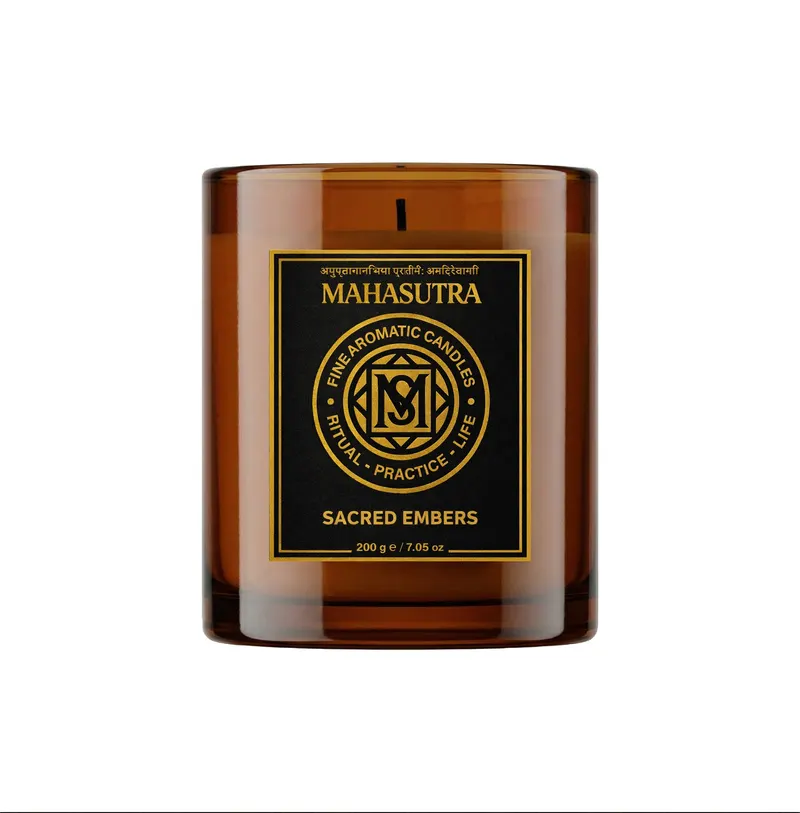
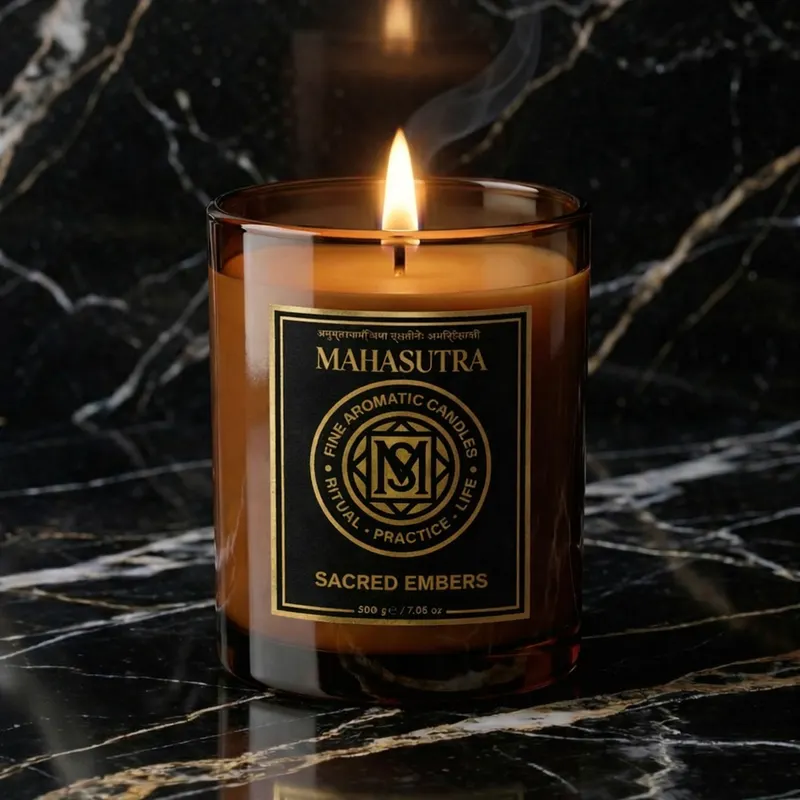
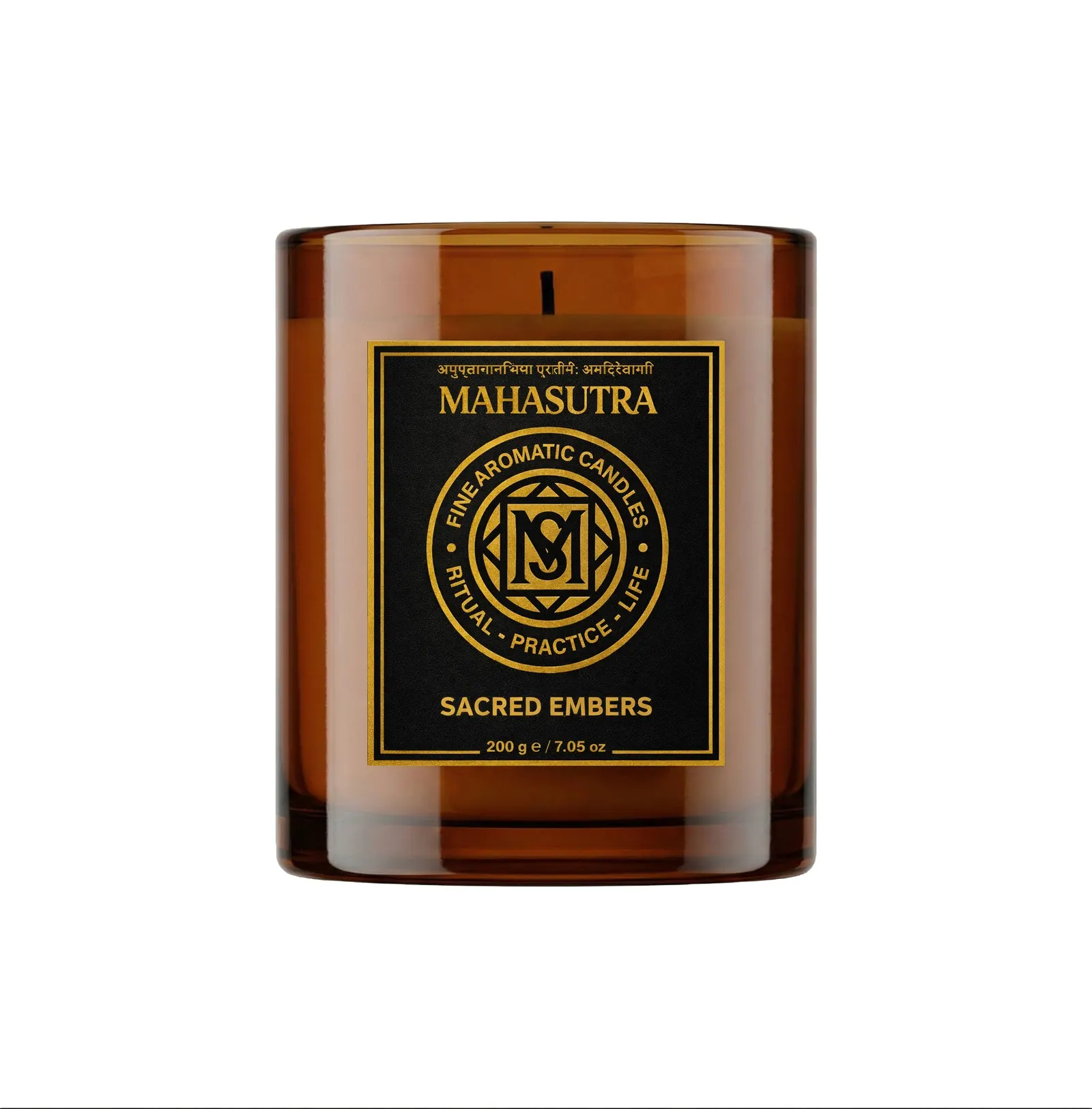
Each natural wax has trade-offs, so many premium candles use blends. Coconut adds creaminess and scent throw, apricot kernel adds smoothness, soy adds structure and a slower burn. Our Fine Aromatic Candle uses a vegetable wax blend of coconut, apricot kernel and soy wax with a natural wooden wick, chosen for a clean, even burn and good scent throw, poured with the same fragrances as our perfumes, such as Sacred Embers and Forest Hypnosis.
What to look for in a good candle
- A wick matched to the jar: a full melt pool within two to three hours with a steady, low flame.
- No black smoke: visible soot means the wick is too long or the candle is in a draught.
- Transparent ingredients: a maker who lists the wax blend, wick type and fragrance approach.
- Good cold and hot throw: it should smell good unlit and fill a room when lit.
Whatever the wax, burning habits decide how a candle performs. Our guide to candle tunnelling shows how to get a full, even burn every time.
Common questions
Is soy wax cleaner than paraffin?
A 2021 controlled study in Environment International found palm, paraffin, soy and stearin behaved similarly, with no wax consistently cleaner. Fragrance type mattered more.
Why do candle makers blend waxes?
Each wax has trade-offs; blends such as coconut, apricot and soy combine creaminess, scent throw and structure.
What is the best wax for scent throw?
Paraffin and coconut blends are known for strong scent throw; a well-matched wick matters as much as the wax.
Sources
- Salthammer T et al. Measurement and evaluation of gaseous and particulate emissions from burning scented and unscented candles. Environment International, 2021;155:106590
- Petry T et al. Human health risk evaluation of selected VOC, SVOC and particulate emissions from scented candles. Regulatory Toxicology and Pharmacology, 2014;69:55–70