
Fragrance Notes Explained: Top, Heart and Base Notes
Perfumes change on your skin over hours because their ingredients evaporate at different speeds. How the fragrance pyramid works, how to read it, and how to test a perfume properly.
Perfume descriptions talk about top notes, heart notes and base notes as if everyone knows what they mean. They describe something real: a perfume changes on your skin over hours, because its ingredients evaporate at different speeds. Once you understand that, you can choose perfumes better, test them properly, and stop judging a fragrance by its first ten seconds.
The fragrance pyramid
Perfumers often describe a fragrance as a pyramid in three layers. It is a simplification, as many modern perfumes are built more like a single accord, but it is a useful way to think about how a scent unfolds.
| Layer | When you smell it | Typical materials |
| Top notes | First 5–30 minutes | Citrus (bergamot, grapefruit, yuzu), light spices (pink pepper, cardamom), herbs, light fruits |
| Heart (middle) notes | From about 15 minutes to several hours | Florals (rose, jasmine, tuberose), teas, green notes, heavier spices |
| Base notes | From about an hour to the end of the day and beyond | Woods (sandalwood, cedar, vetiver), resins (frankincense, benzoin, labdanum), musks, amber, vanilla, oud |
Why perfumes change: volatility
Every aromatic molecule evaporates at its own rate. Small, light molecules, such as the limonene in citrus peel, evaporate fast and reach your nose first, then disappear. Large, heavy molecules, such as those in sandalwood or musk, evaporate slowly and linger for hours. A perfume is a mixture of hundreds of molecules, so what you smell shifts continuously as the lighter ones run out.
This is also why base notes act as fixatives: they slow the evaporation of the whole blend and give it structure.
Reading a pyramid: an example
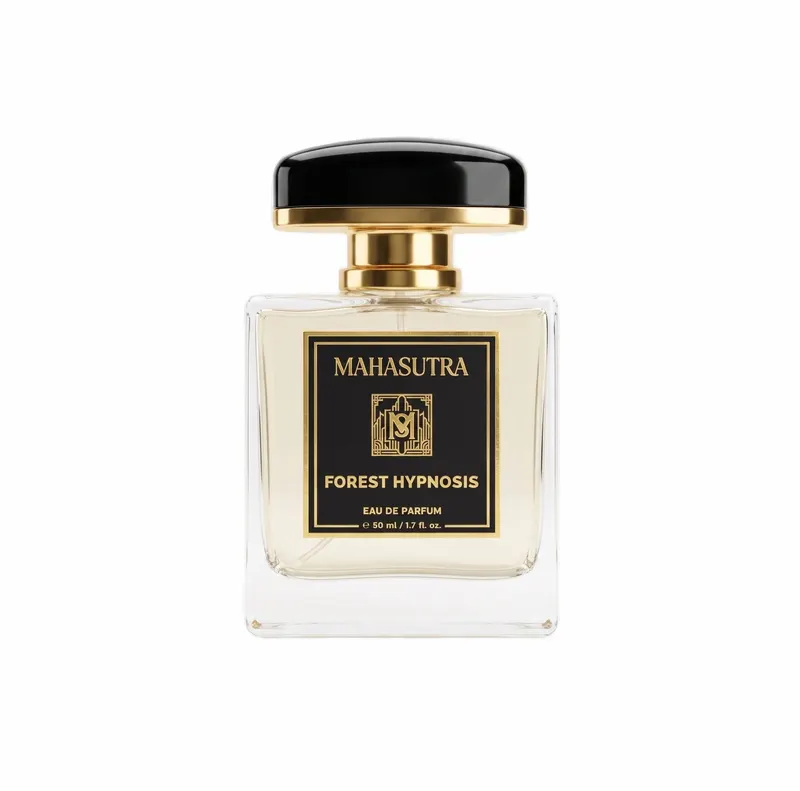
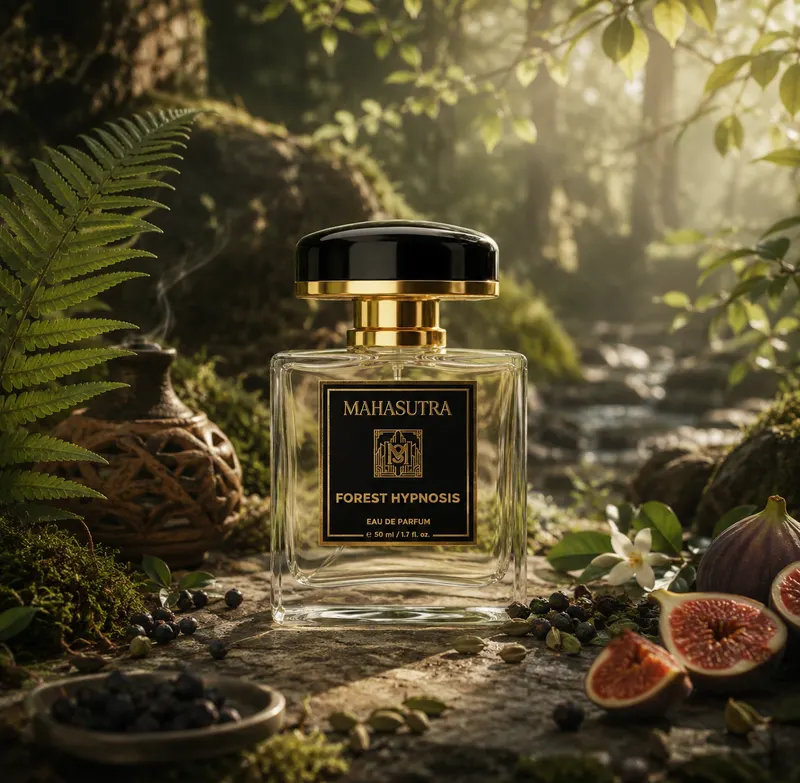
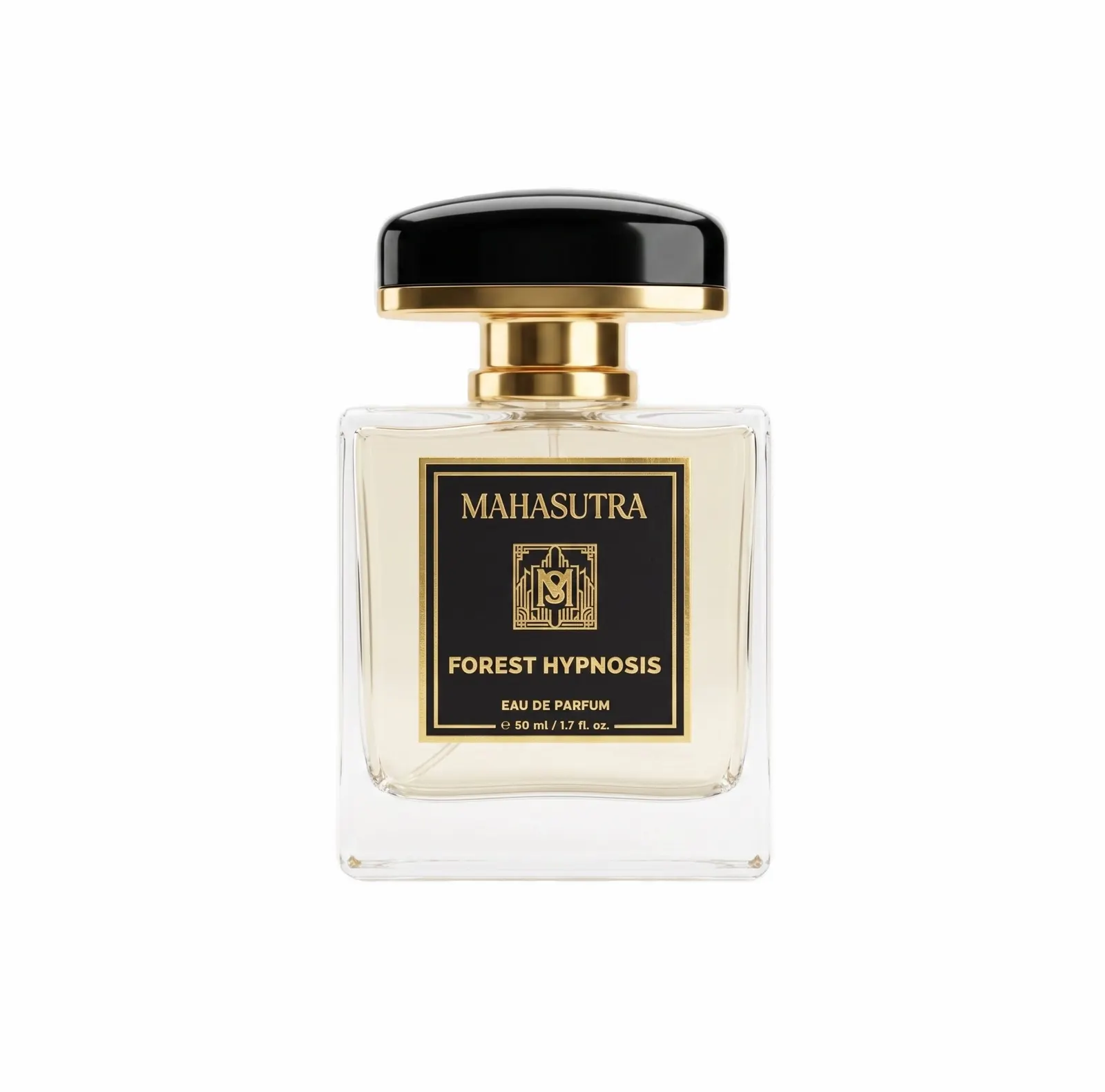
Take our Forest Hypnosis:
- Top: bergamot, juniper berry, pink pepper. Bright, sparkling and slightly peppery.
- Heart: iris, jasmine sambac, fig leaf, osmanthus. Powdery, green and softly floral.
- Base: sandalwood, Atlas cedarwood, vetiver, benzoin, frankincense. Warm, woody and resinous.
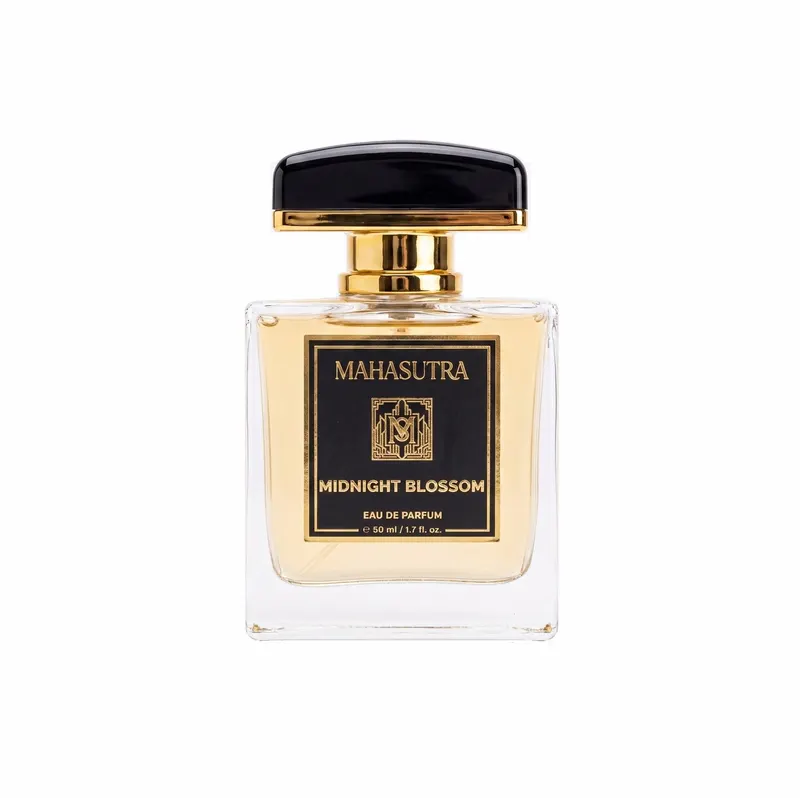
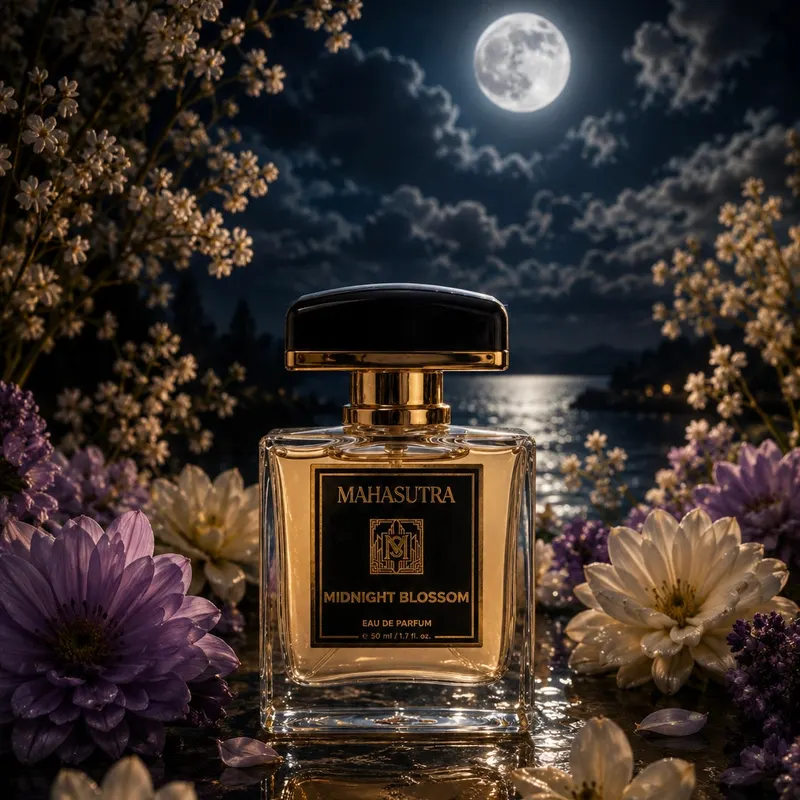
On the skin, you meet the juniper and pepper first, the iris and fig leaf take over within the first half hour, and by the afternoon the woods and frankincense are what people notice. Compare it with Midnight Blossom, whose heart is full of rose, tuberose and jasmine and whose base adds tonka and benzoin, and you can see how the pyramid shapes the whole character.
Other words you will see
- Accord: several materials blended to create one new impression, such as an amber, cognac or ocean accord.
- Drydown: how a perfume smells hours after you apply it, when the base dominates.
- Sillage: the trail a perfume leaves in the air as you move.
- Projection: how far the scent radiates from your skin.
- Olfactive family: the broad style, such as woody, floral, citrus, amber or chypre.
Our fragrance guide has a full glossary and compares every Mahasutra perfume by family and notes.
How to test a perfume properly
- Spray on skin, not just paper. Blotters show the top notes; your skin shows how the scent really develops.
- Don't decide in the first minute. Top notes are designed to attract, but you will live with the heart and base.
- Wear it for a day. Smell it at 15 minutes, 2 hours and 6 hours.
- Test one or two at a time. Your nose tires quickly; smelling coffee beans doesn't really reset it, but fresh air and your own skin help.
- Note the weather. Heat lifts top notes faster and makes base notes bloom. A perfume can feel different on a humid afternoon and in an air-conditioned evening.
For how concentration changes longevity, read parfum versus eau de parfum versus eau de toilette.
Common questions
What are top, heart and base notes?
Top notes are the light first impression lasting minutes; heart notes form the character over hours; base notes are the heavy woods, resins and musks that last longest.
How long do top notes last?
Usually 5 to 30 minutes, depending on the materials, your skin and the climate.
Why does perfume smell different on me?
Skin moisture, temperature and climate change how fast notes evaporate, so the balance of the scent shifts.